
Editor’s Note: Ann is good people. She is so kind, so interesting, and such a great storyteller. Enjoy!
**
I started this story on February 17: the night that the delicate crescent moon signaled the start of Ramadan, the Muslim time of reflection and spirituality.
I enjoy greeting my Muslim friends here in Rochester and also in Sweden with a heartfelt “Ramadan Mubarak,” or “May you have a blessed Ramadan.”
One thing I love about religious high times is that you are instantly forgiven if you have been remiss in keeping in touch. Like at Christmas; your call is always welcome.
This year, as the first night of Ramadan approached, I made an extra effort to contact some of the Syrian refugees I knew when we lived on our Swedish farm.
Syria’s brutal civil war started in 2011 after we had been in Sweden for 5 years. In that time I had learned about Sweden’s generous refugee program. All the structures were in place to humanely vet people applying for asylum, give them shelter, food, schooling and instructions as to how to live while their cases moved through the system.
The war in Syria blew this orderly system completely out of the water because the refugee crisis developed so fast and involved so many refugees who streamed to Europe. I didn’t think it would affect our little farm in the woods. At first of course there were only a few that reached our area. These were wealthy Syrians; multilingual people with passports, and international connections with universities or businesses. There was no central screening place for refugees; instead they were stationed in cities and towns throughout Sweden where staff in local Migration offices could meet and vet them.
A small town near our farm received several of these early arrivals. The town was Älghult, (the name translates as Mooseville) and it was previously known for its glass factories. These had mostly closed, but they had on-site worker’s lodging, now vacant. These were turned into temporary homes for refugees. Suddenly, there were strangers in town, to say the least.
One of my retired teacher friends loved to meet people and was not afraid to say hello and see what happens. To her amazement, on a single walk through town, she met an opera singer, a doctor, an architect, and an engineer. She said she never expected to see people like that in Mooseville. Many of these people had studied English in school and were eager to learn everything they could about Sweden.
As time went on, the arrivals in Mooseville were younger, with an average age of 25. Some were married, having left their families in Syria while they gained a foothold in Sweden. Many others were bachelors. Most had a totally unrealistic view of the difficult path ahead. They had already gone through Hell to get to Sweden and did not anticipate more barriers.
Many had worked in trades as car mechanics, tailors, cooks, or shopkeepers who figured that every town needed them. They were shocked to discover that they were not allowed to work until they were vetted, and that they were expected to learn Swedish in the meantime as fast as possible. It would not be easy to get a job when no Swedes in Mooseville spoke Arabic.
During the peak years of the crisis, Sweden was taking in 50,000 Syrians a year. By population, Sweden was the country that took in the most refugees.
It was chaos. The Migration authorities did supply them with smartphones, and taught them to use WhatsApp to keep in contact with each other, their families and also the Migration authorities. They had health care, like all of us. They were given bus passes so they could explore. They had a monthly stipend on a bank card. Their children were immediately placed in school. Little did these people know that they would probably be living in Mooseville for years.
This is a story of resilience, and also how a little help and an open heart could be the fertilizer to promote resilience, to create new friendships and productive lives. Not all the arrivals in Mooseville were Syrians, but the smoldering civil war there caused a steady stream of refugees to Sweden until the 2020s.
With the rational bureaucratic system flooded, it was the Swedish Lutheran Church that stepped into the vacuum.
Our pastor in Mooseville decided on his own to declare every Tuesday morning as an open “Språk cafe” that is, a language cafe. Townspeople volunteered to sit and fika (have coffee) with people who had no common language with them and try to communicate anyway. Older retired teachers took this on with gusto. So it became a meet your neighbor day with free coffee, tea and cheese sandwiches for anyone who wanted to come. The offer was well promoted; the pastor found multilingual refugees who could make posters in many languages. The pastor supplied each table which pictures of common items and their Swedish names. Naturally, many of these Arabic speakers were not acquainted with our alphabet. But any Swede can point to a picture of a cat and say the Swedish word “Katt.” Or point to a cup and say “kopp.”
I loved these gatherings. I learned at least as much as the refugees did. Being Muslim and perhaps unaccustomed to churches, only the bravest dared step through the door of the church’s community hall, which was thankfully a distance away from the actual church. The fear fell away quickly. Soon the hall was crowded, and we set up additional informal groups with a leader (like me) who would meet twice a week with them to advance their Swedish.
Let me tell you who I met in my first small group of young Syrian men, the people I sent Ramadan greetings to a few days ago, hoping I could still contact them. I was curious about their resilience.
Happily, almost all of them returned my Ramadan greeting, thanking me profusely for how I had helped them survive their traumatic arrival and their transition to productive lives in Sweden.
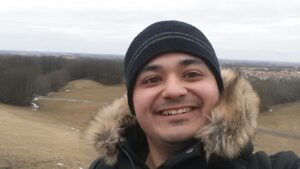 Jamil – a bright-eyed energetic learner who knew some English, and he also knew Italian because he had an Italian grandmother. He was a great help. He had been a dentist in Turkey and Syria. Now he is a dentist in Stockholm.
Ibrahim – a small, gentle tailor who had been abused during his long walk to Sweden. In my class, he kept his mouth covered with his hand and was shy about speaking. Jamil took me aside and explained that Ibrahim had been struck in the mouth by the butt of a Hungarian boarder guard’s rifle. It broke all of his front teeth off and seriously gouged his hard palate. We informed the dental authority who promptly worked on his mouth. Jamil stood by and supported him. After an absence, he returned to class to display an entire mouthful of false teeth. He said to all Swedes he met how grateful he was to Sweden that gave him back his teeth.
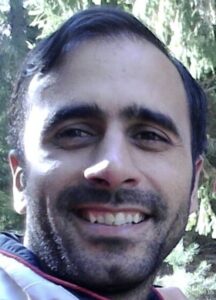 Rami – younger and smaller than the others, perky and friendly. He was one of many of these men who cried on my shoulder when we had a private moment. He had called home and his wife was feeling rejected by his mother. He felt so helpless and so trapped between these two women so far away. Eventually it worked out, so he was able to get his wife and parents to join him in Sweden and I met both women. He works as a welder in a factory today.
Ammar – an experienced factory worker with supervisory experience. He struck me as one of the most reliable, calm people I have ever met. He has worked at a fine pizzeria for years and wears a tall white chef’s hat.
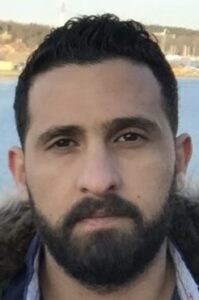 Wabeh – a proud and intrepid man who overcame incredible odds when he chose to illegally sneak from Syria into Sudan, bought a car, and drove himself diagonally across the Sahara Desert to Libya where he paid smugglers to put him on an inflatable boat that was so crowded no one could stand up at any time during the crossing. After nearly capsizing, they landed in Italy. He said the only thing he had left from Syria after that voyage was his T-shirt and jeans. Everything else was washed away. He works as a painter of sports cars in Stockholm, painting them with shine and glitter and pinstriping.
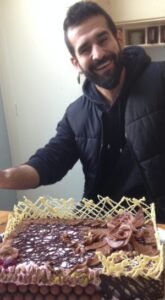
Anas – a pastry chef! Who would have predicted that? He had worked in the fabulous sweet shops of Damascus. I took him to the grocery store to explain the various types of flour, butter, milk, chocolate and sugar so he could recreate his specialty cakes. They were fantastic creations he worked on with almost fanatic focus. Everyone now knows where to order an elegant cake.
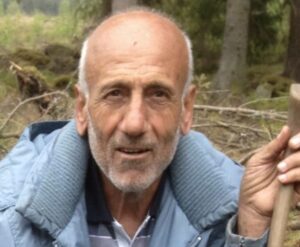 Mohamad – the oldest, who had worked as a mechanic in the engine rooms of Syria’s commercial fleet. He had been all over the world. When I gave him an illustrated children’s book, he got emotional and kissed my hand. It was his first Swedish book. Today he has retired, and is super proud of his twin sons who are studying engineering at University.
And so, we humans do have the capacity to be resilient in our DNA. But it helps to have contact with warm hearts and patience.
I cried when I received their WhatsApp replies; they came in one after another at such a clip I could hardly reply to one before the next sent a message. They thanked me profusely and said I made a huge difference in their lives. Mohamad’s wife said that if she is blessed with a grandson, she will name him Oliver, after our grandson. These replies were my Ramadan gift that reminds me: the little things we do really do matter, AND we humans can be resilient.
Copyright © 2026 Ann Sigford
Hi Ann: Thank you for your memories of Sweden and your eloquence. It’s plain to see that you are a Ramadan gift to UU Rochester. Thank you.
Thank you Cathy and Kathy! I was very fortunate to have the opportunities I did in our little corner of Sweden.
Oh Ann, Your open heart has gathered many gifts.
The threads of kindness you weave wherever you go have made your life a rich tapestry.
I marvel at your insights. Thank you for sharing the stories of these men.
Cathy
Thank you Ann. You and your stories renew my faith in humanity every time I hear from you.